

Black Mamba Knives
Member
D2 gets recommended a lot these days for working fixed blades, but I think the choice between D2 and a simpler high carbon steel like 1075 or 1095 really comes down to how you plan to use the knife. D2 has some clear advantages. With its higher chromium content, it generally handles moisture and corrosion better than traditional carbon steel, and it can hold an edge for a long time. That is useful when you are putting a lot of cuts through rope, hide, wood, or other rough material. The trade-off becomes pretty obvious when you have to sharpen it in the field. If I am carrying a small pocket stone on a hunting trip, I would rather touch up a 1095 blade than spend a long time working on D2. A diamond rod or ceramic sharpener makes more sense for D2 if you are going to be away from the workshop for several days. Hardness is another part of the equation. A properly heat-treated D2 blade can offer excellent edge retention, but higher hardness also means you have to be more careful with lateral stress. A gut hook or narrow tip is not something I would want to twist sideways just because the cut is getting difficult. No steel likes that, but harder steels tend to be less forgiving when abused that way. For a hunting knife that is going to see a lot of cutting before I get home, I can see the argument for D2. For a camp knife that I want to maintain quickly with a basic stone, 1095 or another good high carbon steel is hard to beat. There is no single "best" steel for every working knife. Heat treatment, blade geometry and how the knife is actually used can matter just as much as the steel name stamped on the blade.
For anyone interested in seeing how these steels are used in hand-forged working knives, Black Mamba Knives has examples of D2 and high carbon hunting knives, trackers and gut hook patterns here: https://blackmambaknives.com/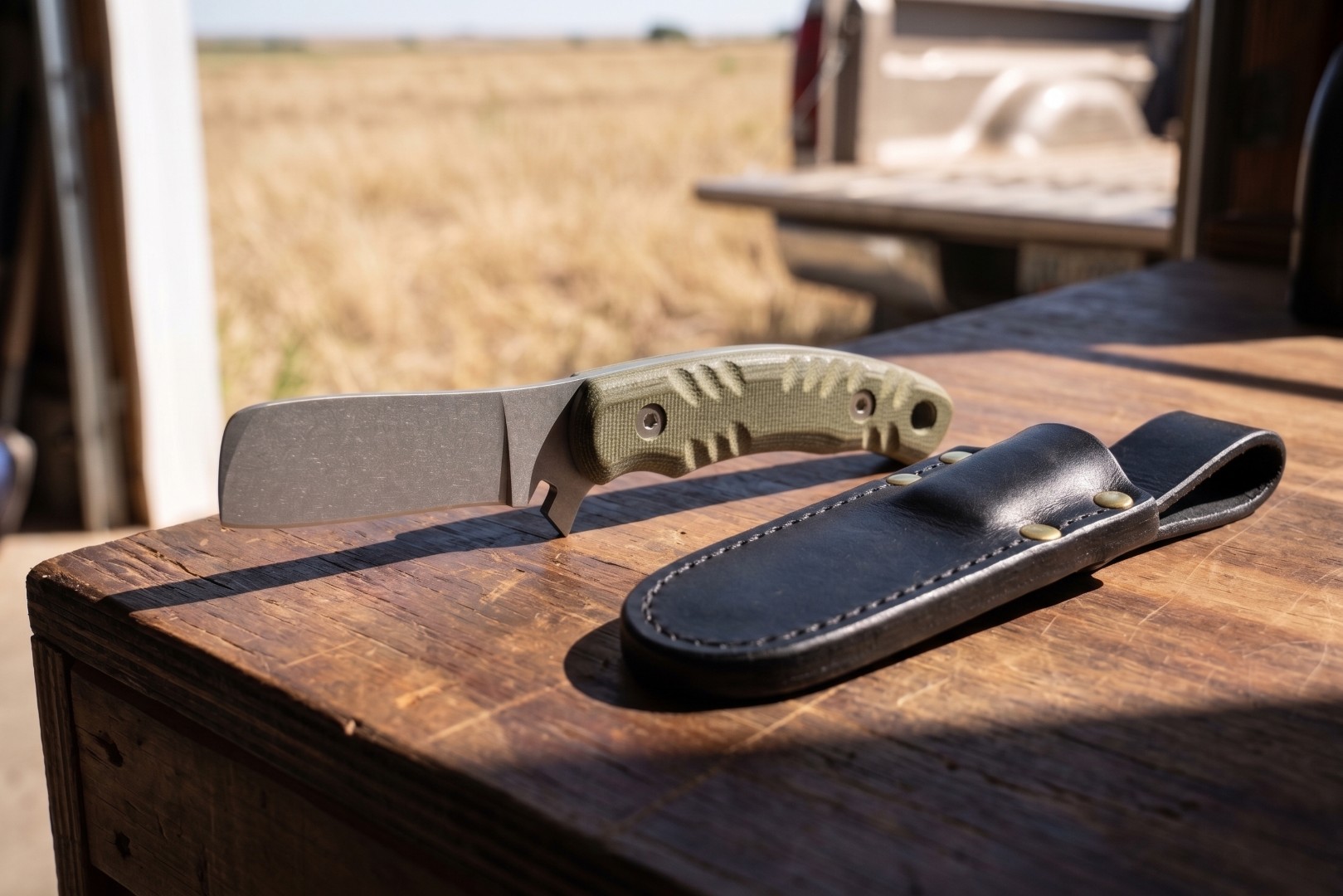
What steel are you guys running on your hunting fixed blades, and what sharpening setup do you carry with it?